
Virtually overnight, artificial intelligence (AI) has jumped off of the science fiction movie screen to become a ubiquitous part of society, infiltrating everything from the operation of the corner coffee shop to the largest global financial institutions. And with the surge of AI and the enormous data processing required to drive the technology behind it, Congress is grappling with the federal policy changes necessary to both promote and regulate the rapidly evolving data center industry.
Electric utilities who once saw data centers as an attractive revenue stream have recalibrated their expectations, many realizing it will be difficult to build sufficient generation fast enough to keep up with demand under current regulatory regimes. Some consumers argue they are competing with data centers for affordable power in some markets and that the massive energy and water needs of data centers may increase utility rates for residential and commercial customers already in the market.
Congress has been quick to realize there will need to be significant policy interventions at the federal level to make America the global leader in AI while protecting consumers from energy price increases. And while Washington has a lot of ideas on how to address these policy challenges, the fear of enacting the wrong policies may be paralyzing lawmakers into inaction.
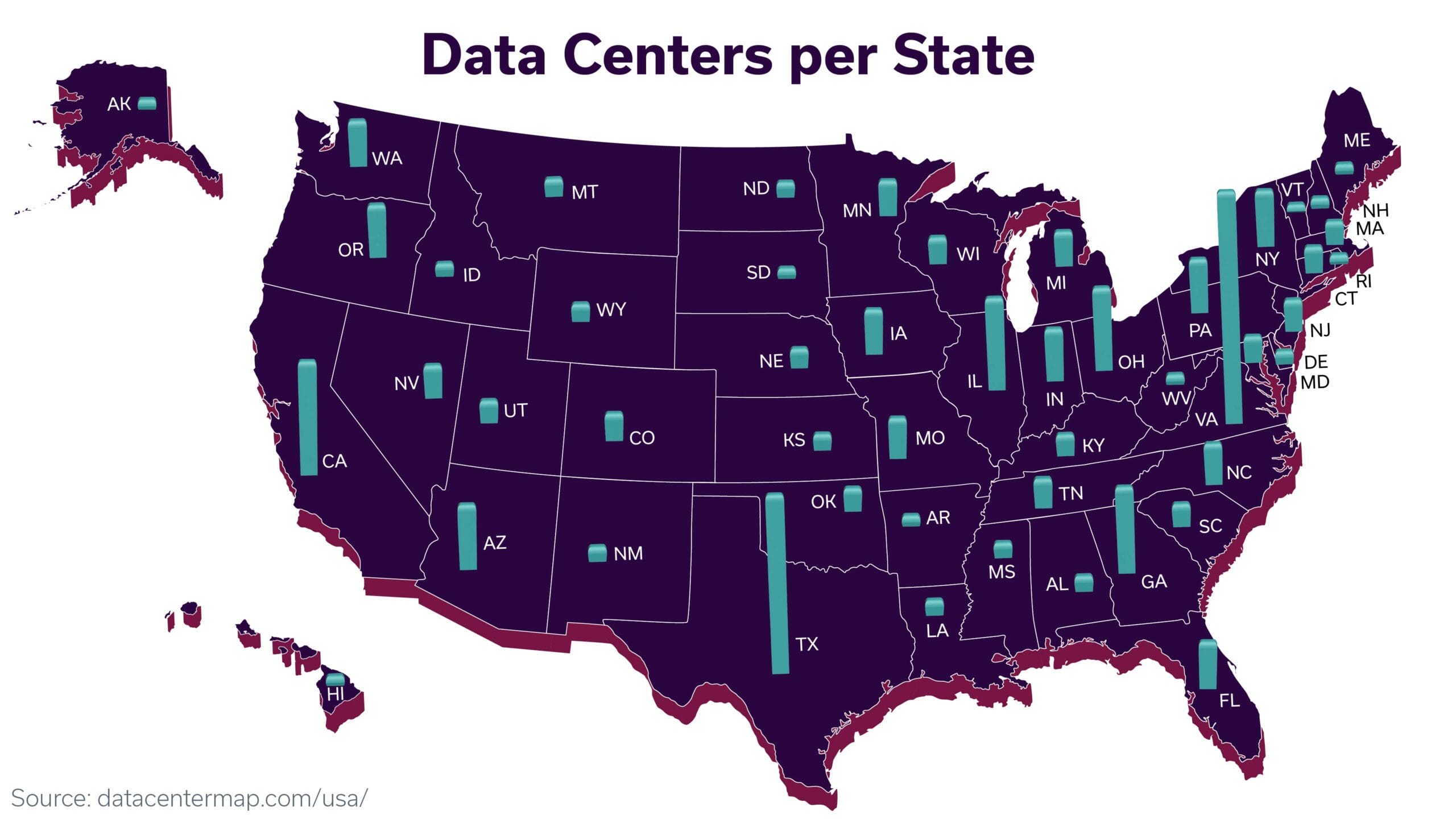
Members of Congress are demonstrating their capacity to craft substantive data center policy: frameworks that promise to safeguard consumers while simultaneously encouraging investment, shaping market incentives, and determining which sectors emerge as winners in an industry already valued in the billions. Legislators, in messaging bills they’ve introduced, are focused on consumer concerns, environmental impacts, construction moratoriums, and water use.
Bills in both the House and Senate are focused on protecting consumers from potential price increases and, in a novel case, allowing data centers to construct their own generation off of the grid entirely. The Preventing Rate Inflation in Consumer Energy (PRICE) Act would actually require data centers to generate their own electricity, while the Data Center Community Impact Act would study the impact of data centers on low-income and minority communities. The AI Data Center Moratorium Act would pause construction of new data centers and the Data Center Transparency Act would require data centers to report on their impacts on local air, water, and energy use. And while dozens of bills have been introduced, no substantive bills have made it to the floor in either chamber, let alone to the President for his signature.
Some of the bills introduced require a deeper dive, including a bill introduced by Senator Tom Cotton (R‑AR) and Rep. Nick Begich (R-AK-At Large), the Decentralized Access to Technology Alternatives (DATA) Act. Their legislation would permit qualifying data centers, manufacturers, and other high‑energy‑use operations to develop fully “off‑grid” electricity systems subject to fewer federal requirements. Under the legislation, these operations would be required to maintain complete physical and operational separation from the existing power grid to ensure system reliability and safeguard public safety.
A similar but more expansive bipartisan proposal has been introduced by Senators Josh Hawley (R‑MO) and Richard Blumenthal (D‑CT). Their legislation, the Guaranteeing Rate Insulation from Data (GRID) Centers Act, would prohibit data center operators from passing energy‑related costs on to consumers and would require public disclosure of their transactions and service agreements with utility service providers.
Rep. Greg Landsman (D‑OH‑03) introduced the No Harm Data Center Act, which would require data centers to finance the full cost of their associated energy‑infrastructure needs, prohibit AI companies from offering non‑disclosure agreements to municipal officials, and mandate comprehensive assessments of the regional environmental impacts of their facilities. He has also introduced the Protecting Families from AI Data Center Energy Costs Act, which would direct the Federal Energy Regulatory Commission (FERC) to convene a technical conference focused exclusively on safeguarding ratepayers.
Congress has also held numerous hearings examining a wide range of data center‑related issues, including infrastructure needs, economic impacts, power consumption, and potential effects on the electric grid and telecommunications networks. Committees have taken testimony from academics, utilities, industry leaders, state regulators, and consumer advocates, reflecting the breadth of stakeholders engaged in assessing the sector’s rapid growth and its implications for consumers.
As Rep. Kathy Castor (D‑FL‑14), the Ranking Member of the House Energy & Commerce Subcommittee on Energy, underscored in a recent hearing, “If we all agree that AI data centers should pay their own way, then let’s address that so that the higher costs are not forced on ordinary consumers,” a stark reminder of the core concern now driving the policy debate and shaping legislative proposals.
To that end, the Chair of the House Energy and Commerce Committee, Brett Guthrie (R-KY-02) recently stated his desire to move forward with legislation to amend the Public Utility Regulatory Policies Act of 1978 to require data centers and other large electricity uses to cover the full cost of the infrastructure needed to serve them. Opening PURPA is a yeoman’s task and would require some level of bipartisan agreement. Even with cooperation from Democrats, the congressional calendar in an election year would make it very unlikely for the Chairman’s legislation to make it to the President’s desk.
___
In the halls of Congress, there is still an opportunity for data center owners and operators to get involved in the policy-making process. Beyond the messaging bills that have been introduced and the congressional hearings that have been held, lawmakers continue to seek input from solutions-oriented issue experts, particularly those with operational expertise.
Policymakers are eager to see discussion drafts of new legislation, feedback on existing bills, or legislative amendments to improve existing law or proposed bills. More hearings will take place and most lawmakers would prefer to “get it right” rather than act too quickly. And as FERC Chair Laura Swett recently noted, most data center operators may not have the legal or policy knowledge to connect their operational challenges to FERC regulations and federal energy policies. Thompson Coburn’s legal, regulatory, and policy team can help data center operators bring their challenges to federal decision makers and formulate workable solutions that regulators and policymakers can put into action.