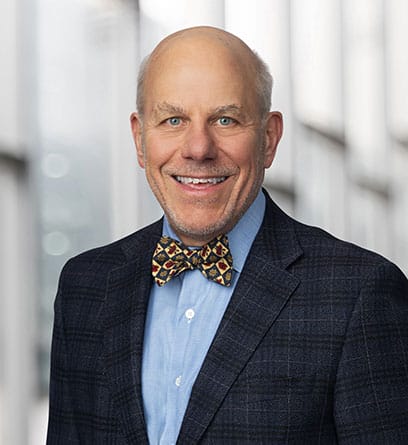
In a recent Law360 article, Thompson Coburn International Trade partner Robert Shapiro shared his perspective on major trade policy developments expected to shape the second half of 2026, including the tariff refund system, Section 301 tariffs and the future of the United States-Mexico-Canada Agreement (USMCA).
Robert said he believes the Trump administration is focused on rebuilding its tariff framework following the U.S. Supreme Court’s February decision striking down tariffs imposed under the International Emergency Economic Powers Act (IEEPA).
“I take it at face value that they’re going to rebuild the tariff wall that they had,” he said.
Robert also discussed the evolving legal questions surrounding tariff refunds after the U.S. Court of International Trade ordered refunds for importers who paid the now-invalid IEEPA duties. He noted that the U.S. Court of Appeals for the Federal Circuit may address issues not fully examined by the trade court, including whether the CIT can order nationwide relief for nonparties and whether U.S. Customs and Border Protection can issue refunds on finally liquidated entries.
“I think that in some ways, the government had to appeal to get those issues resolved,” said Robert. “I think the finality of liquidation and what Customs can do on its own accord after 90 days is an important position for everyone.”
He also addressed Section 301 tariffs, noting that the Trump administration’s authority to modify those duties was strengthened when the Supreme Court declined to review a lower court decision upholding tariff increases on Chinese goods imposed during the president’s first term.
“Since the Supreme Court has denied the cert for the earlier tariffs, I think [that] gives them at least the feeling that they have flexibility to play with them as they want, which is what they wanted of IEEPA,” said Robert.
He said he views the forced labor tariff rate as similar to the baseline universal tariff that was previously part of the unlawful IEEPA regime. The structural excess capacity tariffs, when announced, may be utilized by the Trump administration for the higher tariff rates on certain trading partners akin to the so-called reciprocal rates that were part of IEEPA, he suggested.
Robert said the excess capacity tariffs may be more complicated to implement practically and politically speaking.
“I think that’s a much harder thing for USTR to deal with, because I think there’s going to be exclusions and things like that to address in a more nuanced way with regard to the capacity tariffs,” he said.
Read the full article here.